7-OH
Also printed as 7-Hydroxy
About 13 times as potent as morphine in one lab test. The DEA has moved to place it in Schedule I, alongside heroin.3 4
 Learn More
Kratom opioids are products sold as kratom that contain a concentrated opioid similar to fentanyl and heroin. Here is what it looks like, what to look for on the label, and how strong it can be.1 3
Every product below is sold as kratom. Each one contains an opioid. It looks like candy, and it sits near the register.

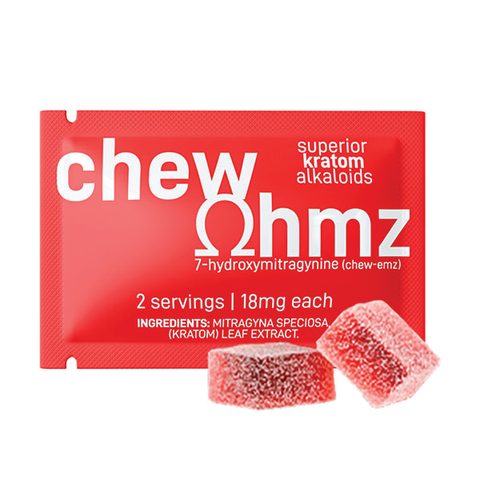
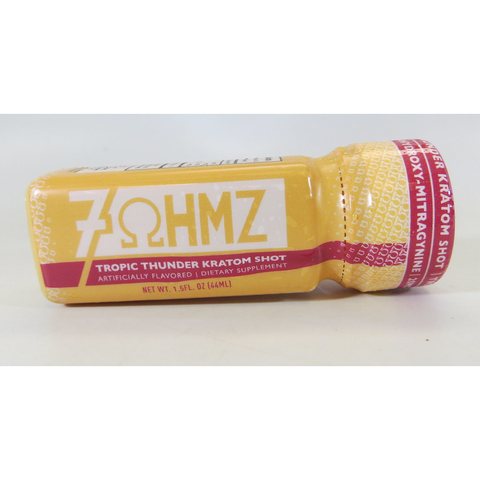
Kratom opioids are concentrated or lab-made versions of compounds found in the kratom leaf. If you see one of these names on a package, it contains an opioid.3 4
Check the Package For
Name on the labelWhat it is
On shots, tablets and gummies sold near the register. New kratom opioids keep appearing, and these are only the latest.4
Also printed as 7-Hydroxy
About 13 times as potent as morphine in one lab test. The DEA has moved to place it in Schedule I, alongside heroin.3 4
Also printed as Pseudo
About 100 times as potent as kratom’s main compound in animal studies. Placed in Schedule I in August 2026. The DEA plans to replace that order with a limit on how much a product can contain.4
Fentanyl, heroin and kratom opioids all lock onto the brain's mu-opioid receptors, the switches that control pain and breathing. Too much shuts breathing down. That is how opioid overdoses kill.
The questions we hear most, and what to know if you’re worried someone you love is using.
It is when someone keeps using kratom even though it is causing problems, and finds it hard to cut back or stop. It is not listed separately in the DSM-5, the manual clinicians use to diagnose, but because kratom acts on opioid receptors, it can be diagnosed and treated as an opioid use disorder.1
Kratom comes from the leaves of a Southeast Asian tree, Mitragyna speciosa. It contains compounds, including mitragynine and 7-hydroxymitragynine (7-OH), that act on mu-opioid receptors in the brain. It is sold as powders, capsules, teas, shots, tablets and gummies.1 2
Our name for concentrated and lab-made opioids sold under the kratom name. The best known are concentrated 7-OH, which occurs naturally in only tiny amounts in the leaf, and MGPI (mitragynine pseudoindoxyl), which is made in a lab. In one lab test cited by the FDA, 7-OH was about 13 times as potent as morphine; in animal studies, MGPI was about 100 times as potent as kratom’s main compound. Both can slow or stop breathing like other opioids, and both are often marketed simply as kratom, so read labels closely.3 4
No. Our focus is protecting kids. We oppose sales to minors; sales in gas stations, vape shops and liquor stores; and kratom opioids like concentrated 7-OH and MGPI. We support strengthening and passing the End Gas Station Heroin Act (S. 5383 / H.R. 10272) with science-based potency controls, independent research on kratom's risks, and treatment for anyone who needs it.
Because "kratom" is the word parents recognize, and watching is the job: knowing what is sold near your kids and what it looks like. Behind the name is a focused goal: keep kratom opioids away from kids.
Some adults report using kratom to ease opioid withdrawal, pain or anxiety, and NIH-funded scientists are studying it.8 But there is no FDA-approved kratom product, and products vary widely in strength and purity.2 Traditional kratom leaf isn’t risk-free either: regular use can lead to dependence and withdrawal.1 If you or someone you love is using kratom to manage withdrawal, talk with a doctor: FDA-approved medications for opioid use disorder are safe and effective.1
Kratom is not a federally controlled substance, though the DEA lists it as a "drug of concern."1 No federal law sets a minimum age or otherwise regulates kratom products, and as of January 2026, 20 states did not control or regulate kratom in any way.6 MGPI, a related lab-made opioid, has been temporarily in Schedule I since August 2026. On October 14, 2026, the DEA proposed new limits covering both concentrated 7-OH and MGPI; that order may publish on or after November 13, but that date is not guaranteed.4 The End Gas Station Heroin Act (S. 5383 / H.R. 10272) would write those controls into law.7
It can be. Kratom acts on opioid receptors, and people who use it regularly can develop withdrawal and a use disorder.1 Kratom opioids carry the dependence risks of other opioids.3 The good news: it is treatable. A doctor, or the SAMHSA Helpline at 1-800-662-4357, can help you find care.
Yes, especially with kratom opioids, which can slow or stop breathing like other opioids.3 CDC data show 5,208 overdose deaths involving kratom from 2020 to 2024 in the jurisdictions that report, and DEA toxicology testing has found 7-OH in 55 overdose deaths since 2019.4 12 Many kratom-related deaths also involve other substances: 79% of those reported to U.S. poison centers from 2015 to 2025, according to the Centers for Disease Control and Prevention.5 If someone is hard to wake or breathing slowly, call 911 and give naloxone if you have it.
No. The FDA says kratom cannot be lawfully sold as a drug, a dietary supplement or a food additive, and warns the public against using it.2 No federal law regulates what is inside. Testing has found heavy metals and harmful bacteria in kratom products.1
Look for gummies, tablets, shots or powders labeled "kratom," "7-OH," "7-Hydroxy," "Pseudo" or "extract." You might notice drowsiness, pinpoint pupils, nausea, mood swings, frequent gas-station trips or missing money.3 Call 911 if your child is unconscious, very drowsy or hard to wake.
Start early and stay calm. Ask what they have heard, share the facts, and explain that "natural" does not mean safe and that store products are not checked like medicine. Keep the door open so they come to you with questions.
Call Poison Help at 1-800-222-1222 right away, even if your child seems fine. If they are hard to wake or breathing slowly, call 911.
Add your name and we’ll send you one clear thing to do.
United Against Fentanyl is a nonpartisan, nonprofit organization that interrupts the use of illicit fentanyl through innovative, bold, and effective initiatives. Kratom Watch is a UAF campaign focused on kratom opioids, the concentrated and lab-made opioids sold under the kratom name, because keeping kids from their first opioid is part of the same fight.
General information, not medical advice. In an emergency, call 911.
© 2026 United Against Fentanyl. All rights reserved.
Privacy Policy


